You know that feeling when your phone rings a little too late in the evening—and your stomach drops before you even see the caller ID? Yeah. That’s the “peace of mind” we’re talking about.
For a lot of families in Vacaville, the stress isn’t always loud. It’s not always a dramatic emergency. It’s quieter than that. It’s the constant background noise of worry:
- “Did Mom eat today?”
- “Is Dad taking the right pills?”
- “What if they fall and can’t reach the phone?”
- “Why does the house smell… off?”
And for seniors, peace of mind can disappear just as easily—especially when everyday tasks start feeling like small mountains. A shower becomes risky. A short walk feels uncertain. Cooking feels tiring, and driving feels complicated. The world shrinks.
The good news? Peace of mind isn’t some magical “either you have it or you don’t” thing. It’s something you can rebuild—step by step—when the right supports are in place. And often, that support looks like in-home care that’s actually personalized, not cookie-cutter.
Let’s get into what peace of mind really means, why it matters so much, and how families in Vacaville can get it back without turning life upside down.
Peace of mind isn’t “extra”—it’s the foundation

Photo by Freepik
Peace of mind gets treated like a luxury. Like it’s something you earn after everything is handled.
But for seniors and families? Peace of mind is more like the foundation of a house. When it’s solid, everything else feels stable. When it cracks, you feel it everywhere—sleep, mood, relationships, even health.
One reason it matters so much: stress isn’t just uncomfortable. Chronic stress changes how we function day-to-day. It makes people more reactive, more exhausted, and less patient. It also makes decision-making harder—so families delay important choices, and seniors push themselves beyond what’s safe, just to avoid “being a burden.”
And here’s the twist: peace of mind is rarely about one giant solution. It’s usually about many small “wins” stacked together:
- Someone is there to help prevent a fall, not just respond to one.
- Meals become consistent.
- Medication timing becomes routine instead of a guessing game.
- A senior feels supported, not supervised.
If you want a quick definition angle, the idea of a caregiver is broader than most people think—here’s a simple overview on Wikipedia: Caregiver. In real life, the best caregiving often looks like tiny moments that keep bigger problems from ever happening.
What peace of mind looks like for seniors
For seniors, peace of mind usually looks like confidence.
Not “I can do everything myself like I did at 45.” More like: “I can live my life without fear.”
It’s:
- Feeling steady while walking down the hallway
- Knowing meals will happen without effort
- Getting help with personal care without embarrassment
- Having someone who notices changes early (fatigue, confusion, mood shifts)
And maybe the biggest one: being able to stay at home safely—what many people call Aging in place.
What peace of mind looks like for families
For families, peace of mind is the ability to live your life without that constant mental tab running in the background.
It’s:
- Sleeping through the night without checking your phone
- Not feeling guilty every time you miss a call
- Knowing someone reliable is watching for warning signs
- Getting updates that replace fear with facts
It’s not about doing less because you care less. It’s about creating a support system that protects everyone involved.
Why this topic hits differently in Vacaville
Vacaville has a special kind of family dynamic. A lot of adult children live close enough to help—but not close enough to be there daily. Others live in nearby cities and do the “weekend check-in” routine. On paper, it sounds manageable. In real life, it can feel like you’re constantly playing catch-up.
The “close enough to help” problem
When you’re “close enough,” expectations rise. Your parent may assume you can swing by anytime. Your siblings may assume you’re handling it because you’re local. You may assume you should be handling it because you’re nearby.
But “close enough” isn’t the same as “available.” Work, kids, commutes, and life don’t pause because someone needs support.
That’s how stress grows—slowly, quietly—until it becomes normal.
Busy schedules, long days, and the quiet guilt loop
A lot of families live in a guilt loop:
- You notice something is off.
- You try to handle it yourself.
- You get overwhelmed.
- You feel guilty for being overwhelmed.
- You delay getting help because guilt makes it feel like “quitting.”
And the senior might be stuck in their own loop too:
- They struggle with something.
- They hide it because they don’t want to worry you.
- The struggle gets bigger.
- A crisis forces the conversation anyway.
The earlier you introduce support, the calmer the whole process tends to be.
The biggest peace-of-mind stealers at home
If peace of mind is the foundation, these are the termites. They don’t always announce themselves. They just quietly weaken everything.
Safety worries that keep everyone on edge
Safety worries are exhausting because they’re unpredictable. One day is fine. The next day, something happens.
Falls, slips, and “I’m fine” moments
A fall doesn’t just cause injury—it often causes fear, and fear changes behavior. Seniors might:
- Move less (which weakens muscles)
- Avoid showers
- Stop going out
- Become more isolated
That’s why prevention matters. If you want a simple explainer on the concept, here’s Wikipedia’s overview of Fall prevention.
Common warning signs families notice:
- Bruises with vague explanations
- Furniture-walking (using chairs and counters as balance tools)
- Refusing stairs
- Avoiding bathing because it feels risky
These aren’t “normal aging quirks.” They’re signals.
Kitchen risks and forgotten appliances
The kitchen is one of those places where memory + fatigue can turn into danger fast.
Watch for:
- Burnt pots or pans
- Stovetop knobs bumped on accidentally
- Food left out overnight
- Expired food stacking up because shopping is hard
Families often downplay this—until a near-miss becomes a real emergency.
Memory changes that create constant uncertainty
Memory changes don’t always look like dramatic confusion. Often, they look like repetition, disorganization, or odd choices.
When forgetfulness becomes a pattern
Everyone forgets things. The difference is consistency and impact.
Red flags include:
- Missing appointments repeatedly
- Losing track of time or day
- Misplacing items in strange places
- Getting overwhelmed by steps in a simple task (like making tea)
If dementia is a concern, here’s a general background page: Dementia. The important thing isn’t self-diagnosing—it’s noticing risk and responding with supportive structure.
Medication mistakes that snowball quickly
Medication issues are one of the fastest ways life gets complicated for seniors.
Why timing and consistency matter
A small mistake like “I forgot” can turn into:
- dizziness
- confusion
- falls
- ER visits
- worsening chronic symptoms
Even when seniors understand their meds, managing multiple bottles and schedules can be overwhelming. Here’s a basic definition of Medication.
Often, the fix isn’t “control.” It’s routine support—simple medication reminders, refills tracked, and someone who notices, “Hey, this bottle’s still full.”
How personalized in-home support changes everyday life

Photo by Freepik
This is where families often breathe out for the first time in months. Because the right support doesn’t just “help with tasks.” It changes the emotional temperature of the home.
And the key word is personalized.
Not every senior needs the same level of help. Not every family needs the same schedule. The best home care services fit into someone’s life like a well-worn glove—comfortable, familiar, and useful.
Mobility support that protects confidence
Mobility help isn’t just about physical safety. It’s about confidence.
When a senior feels unsteady, they often stop doing things they enjoy:
- short walks
- errands
- visiting friends
- even moving around the house
A caregiver can help with:
- steadying support while walking
- safe transfers (chair, bed, shower)
- fall-risk awareness (shoes, rugs, clutter)
- gentle movement routines to keep strength up
That kind of support can prevent the “one fall changes everything” scenario.
Memory support that preserves dignity
Memory changes can be humiliating for seniors. They may know something is slipping, and that awareness can create anxiety or defensiveness.
Personalized in-home care can help by:
- creating predictable routines (less mental strain)
- using simple reminders without making someone feel “tested”
- keeping the environment calm and uncluttered
- offering companionship that reduces agitation
The goal isn’t to point out what’s wrong. It’s to make daily life smoother.
Medication reminders without making it a “thing”
A good caregiver doesn’t walk in like a drill sergeant with a pill chart. They blend it into the day.
Think:
- “Hey, let’s grab a glass of water and do your morning meds.”
- “I’ll set them out while you finish breakfast.”
- “Let’s check refills before the weekend.”
That’s how medication management becomes natural instead of stressful.
Companionship that lifts the emotional fog
Loneliness doesn’t always look like sadness. Sometimes it looks like irritability. Sometimes it looks like fatigue. Sometimes it looks like a senior who suddenly “doesn’t feel like” doing anything.
Companion care can be the difference between a day that drifts and a day that feels alive.
It might look like:
- sharing lunch
- taking a short walk
- playing cards
- chatting about old stories (the ones you’ve heard 20 times and still secretly love)
It’s not fluff. It’s mental health support—quietly, consistently.
A simple framework families can use
When families aren’t sure what they need, I like to use a simple three-part framework:
Safety
Safety means fewer emergencies, fewer near-misses, fewer “what if” thoughts.
It can include:
- fall prevention routines
- safe bathing help
- mobility support
- meal safety (stove, nutrition, hydration)
Consistency
Consistency is underrated. It’s also where peace of mind grows the fastest.
When a senior has a predictable rhythm, they’re often calmer and more cooperative. When families have a predictable support schedule, they stop living in panic mode.
Consistency can mean:
- the same days each week
- similar caregiver matches
- routines that repeat (meals, meds, hygiene)
Communication
This is the big one for families. Because what most adult children want isn’t control—it’s clarity.
The difference between “checking in” and actually knowing
Calling your parent daily isn’t the same as knowing they’re okay.
“Checking in” often sounds like:
- “You good?”
- “Yep.”
- “Okay, bye.”
But real knowing comes from details:
- Did they eat?
- Did they move around today?
- Are they more confused than last week?
- Are there new bruises?
- Is the house safe?
That’s what structured caregiving updates can provide—information that turns anxiety into calm.
What home care can realistically include
Here’s where people get stuck: they think home care is either “nothing” or “full-time.”
It’s not. It’s flexible.
And if you’re searching specifically for In-home care assistance offering peace of mind in Vacaville CA, the biggest benefit is that you can start small and adjust as needs change—without moving your loved one out of the home.
Companion care vs. personal care vs. specialized support
A quick way to think about it:
- Companion care: social support, light housekeeping, errands, meal prep
- Personal care: bathing, dressing, grooming, toileting, mobility assistance
- Specialized support: memory support, post-hospital support, chronic condition routines
You can mix and match. Many families start with companionship and gradually add personal care when needed.
Respite care that gives families breathing room
Family caregivers deserve breaks—real ones. Not “I’ll rest after I finish everything.”
That’s the purpose of Respite care.
Respite care can cover:
- a few hours so you can run errands
- evenings so you can sleep
- weekends so you can travel or reset
And honestly? Sometimes it’s the only thing that prevents burnout.
Short-term care after illness or hospitalization
This is another “peace of mind” lifesaver.
After a hospital stay, seniors often go home with:
- new meds
- weakness or balance issues
- follow-up appointments
- dietary instructions
Short-term in-home support helps families avoid the “discharge cliff” where someone is home—but not truly ready to manage alone.
Choosing the right help without getting overwhelmed
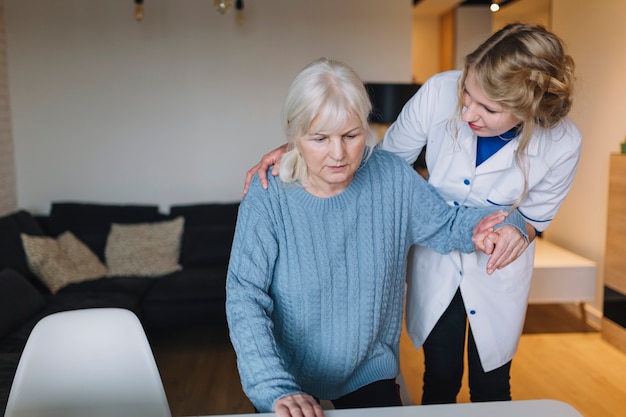
Photo by Freepik
Choosing care can feel like shopping for something you never wanted to buy. It’s emotional. It’s confusing. And nobody wants to “get it wrong.”
Here’s how to simplify it.
Questions that instantly reveal quality
Ask providers (or individual caregivers) questions like:
- How do you match caregivers to seniors? (Personality matters.)
- What does communication with family look like?
- How do you handle schedule changes or emergencies?
- What training do caregivers have for mobility and memory support?
- Can we start with a small schedule and expand later?
Good care is organized care. Clear answers usually mean clear systems.
Red flags that look small—but aren’t
Watch out for:
- vague answers about training
- no backup plan if a caregiver is sick
- pressure tactics (“sign today” vibes)
- poor communication (slow, unclear, dismissive)
Peace of mind dies fast when reliability is shaky.
Finding the right match for personality and routine
A caregiver can be technically skilled and still be the wrong fit.
A great match respects routines:
- preferred wake-up times
- favorite meals
- how someone likes their home kept
- whether they want chatty company or calm presence
This is where agencies like Always Best Care can be helpful—because matching and scheduling structure can reduce the trial-and-error phase for families who are already tired.
A Vacaville-style story
Let’s make this real with a simple (very common) scenario.
Before help: the daily “what if”
Linda lives in Vacaville. Her dad, Ray, is in his late 70s and insists he’s fine. He’s proud. Independent. The classic “don’t fuss over me” type.
Linda calls every night. Sometimes he answers. Sometimes he doesn’t. When he doesn’t, she spirals.
- “What if he fell?”
- “What if the phone is dead?”
- “What if he’s confused and can’t reach me?”
On weekends, she visits and notices little things: unopened mail, a sink full of dishes, leftovers that look… questionable. Ray laughs it off. “I’ve been busy.”
But Linda isn’t sleeping well anymore. She’s doing the mental math constantly.
After help: the calm returns
They start with a few visits a week—nothing dramatic. The caregiver helps with light housekeeping, meal prep, and gentle reminders.
Two weeks later, the shift is subtle but powerful:
- Ray is eating better.
- The house feels safer and less cluttered.
- Linda gets updates that answer the questions before fear gets loud.
- Ray starts going on short walks again because he feels steady.
The best part? Ray doesn’t feel like he “lost independence.” He feels like he gained breathing room.
That’s what peace of mind looks like in real life: not perfection—just stability.
Quick tools you can actually use
Sometimes you don’t need more information. You need a simple way to decide what’s next.
A table: need → support → peace-of-mind benefit
| What you’re noticing | Helpful home care support | What it improves emotionally |
| “I’m worried about falls” | Mobility assistance, safer routines, basic home safety help | Less fear, more confidence |
| “They’re forgetting things” | Routine support, memory-friendly reminders | Less confusion, fewer arguments |
| “Meds are a mess” | Medication reminders, refill tracking | Less risk, fewer emergencies |
| “They’re lonely” | Companion care, outings, conversation | Better mood, more engagement |
| “I’m burning out” | Respite care, scheduled coverage | Relief, sleep, patience returns |
A one-week checklist to decide next steps
Try this for 7 days. No judgment—just data.
- Did they eat 2–3 balanced meals most days?
- Did they bathe and change clothes?
- Did they take meds correctly?
- Any near-falls or bruises?
- Any missed calls that felt unusual?
- Is the home reasonably safe (paths clear, no spoiled food)?
- Mood: more withdrawn, irritable, anxious, or flat?
If you’re checking “no” more than you’re checking “yes,” it’s not a failure. It’s a signal.
And if you’re feeling stretched thin, it’s also a signal that support isn’t optional—it’s necessary.
A final note you’ll want to remember

Photo by Freepik
Peace of mind isn’t about controlling everything. It’s about building a setup where everyone can breathe again.
For seniors, that means staying safe, supported, and respected at home. For families, it means replacing constant worry with consistent care and clear communication.
If you’re looking for In-home care assistance offering peace of mind in Vacaville, CA, start small. A few hours a week can change the whole tone of life—especially when the care fits your loved one’s personality and routine.
And when you’re ready to explore options, Always Best Care is one place families often look when they want structured support that feels human—not clinical—and a plan that can grow as needs change.
FAQs
1) What does “peace of mind” actually mean in senior home care?
It usually means fewer unknowns and fewer emergencies. Practically, it looks like consistent meals, safer mobility, reliable medication routines, and a caregiver who notices changes early. Emotionally, it means seniors feel supported (not supervised), and families stop living in constant “what if” mode.
2) How many hours of in-home care do most families start with?
Many families start with something simple—like 6 to 12 hours a week—then adjust. A common approach is a few visits spread across the week to support routines (meals, light housekeeping, reminders) and reduce the biggest risks without overwhelming the senior.
3) Is companion care different from personal care?
Yes. Companion care focuses on social support and daily-life help (meal prep, errands, conversation). Personal care includes hands-on assistance like bathing, dressing, grooming, and toileting. Lots of families use both—starting with companionship and adding personal care later as needs change.
4) How can in-home care help seniors who are becoming forgetful?
Caregivers can build predictable routines, offer gentle reminders, reduce clutter and confusion in the home, and provide calming companionship. The goal is to make daily life smoother and safer—without making the senior feel embarrassed or “tested.”